California General Election 2026
Voter Guide
California Attorney General
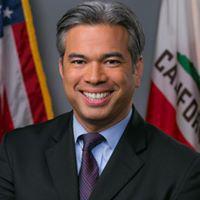
Incumbent Attorney General Rob Bonta cares about enforcing state housing law. He loves suing NIMBY cities. Need I say more?
California Insurance Commissioner
To understand the significance of the Insurance Commissioner race, you must understand a bizarre regulatory system: Prior to 1991, the California had a governor-appointed commissioner who reviewed insurance prices but did not control them. Then, in 1988, California voters passed Prop 103 (a voter initiative, naturally) creating an elected Insurance Commissioner with the power to approve insurance rate changes for property and casualty insurance, including things like home and car insurance. Thus began the slow strangulation of California’s home insurance industry. Elected commissioners had strong incentives to artificially suppress insurance prices, forcing insurers to keep rates low even as the risk of fires and floods increased over time. Homeowners living in risky areas got cheaper insurance, at first. However, rather than offer plans at a loss as risk from natural disasters like wildfires has grown, insurers have increasingly refused to insure large parts of the state—or left entirely. Homeowners in safer areas have suffered too, left with fewer options and higher prices because of the Insurance Commission’s favoritism to rich homeowners living in fire-prone hills or flood-prone coasts. As a result of the Insurance Commission’s draconian regulations, more and more Californians have lost their private insurance entirely. Their only option has been the state’s FAIR Plan, supposedly an insurer of last result. The FAIR Plan has gone to the edge of insolvency, meaning it will soon need to be bailed out during the next major wildfire disaster. California taxpayers—even those who do not live in fire-prone or risky areas—could eventually be forced to pay billions of dollars to cover the risk of homeowners living in high fire-risk areas. In recent years, current Commissioner Ricardo Lara has reversed course on many of the policies that broke California’s insurance market.
Recommended: vote yes
Prop 1 is an $11.25 billion bond to fund low-income housing production. The bond could fund as many as 40,000 new affordable homes and unblock a stuck construction pipeline. Spending money won’t on its own end California’s housing shortage. And Prop 1 has an “everything bagel” problem, splitting money between 13 different programs to satisfy different constituencies. But subsidized housing helps some of the state’s most vulnerable residents, including many whose needs won’t be easily met by market-rate development such as those exiting homelessness. Furthermore, direct funding low-income housing through general funding like Prop 1 creates more political opportunity to reform costly taxes on market-rate housing—such as transfer taxes and so-called “inclusionary zoning” policies—that inadvertently make the problem worse. If money for subsidies comes from general fund revenue, it becomes politically possible to lessen the burden placed on market-rate tenants—and incentivize lower rents long run.
Recommended: vote yes
Prop 2 allows California to invest more money in its rainy day fund, which is especially important in a state where tax revenue swings wildly from year to year.
Recommended: vote yes
Prop 3 extends California’s top marginal income tax rates indefinitely. I prefer property and capital gains taxes to income taxes, but, given Prop 13’s restrictions on property taxes, top marginal rates are an essential part of the state’s revenue streams.
Recommended: vote yes
Prop 4 would amend Prop 73, a legislatively referred ballot measure passed in 1988, by legalizing public financing of election campaigns in local elections. Prop 73 also placed limits on campaign contributions and restricted public officials from using public funds for mass mailers, both good policies that Prop 4 won’t touch. I have mixed feelings about public financing of campaigns, but local governments should have the choice to do so. And I appreciate the legislature amending its own prior decisions in response to changing political preferences.
Recommended: vote yes
Prop 5 eliminates off-cycle elections of state officers after recalls. This ensures that statewide officers are elected in higher-turnout primaries or general elections and eliminates the high cost of administering special elections when recalls occur.
Recommended: vote no
Prop 37 would authorize $25 billion in bonds to subsidize middle class down payments for new homeownership builds. It’s not clear how the bond would impact home prices: It might spur new construction; it might enable higher-income but low-wealth property owners to bid more on existing housing stock—pushing up prices in the process. More importantly, budgeting by voter initiative is irresponsible. No individual who can raise a few tens of millions of dollars to qualify an initiative for the ballot should get to allocate tens of billions of California’s tax money. Bob Hertzberg, formerly a powerful state senator and assembly member, led the campaign to get Prop 37 on the ballot. He should have done this while he was elected. If he couldn’t get his colleagues to agree, then he certainly can’t get me.
Recommended: vote no
Recommended: vote no
Recommended: vote no
Prop 40, the “Billionaire Tax,” would also be a mistake, though I empathize with supporters. The measure would charge Californians with assets over $1 billion in value a one-time 5% wealth tax, to be paid over five years and spent primarily on healthcare. Due to federal spending cuts, California faces a genuinely severe healthcare funding crisis. SEIU-United Healthcare Workers West, a union representing healthcare employees that has spent $30 million supporting Prop 40, wants to protect its members’ jobs. But Prop 40 is a bad fix because: It’s a voter initiative, which are broadly harmful for all the reasons I’ve described above. Because it’s a voter initiative, it’s written rigidly, without discretion by the legislature to spend the huge revenue on a range of priorities. Almost all Prop 40 revenue would be restricted to healthcare spending. But many programs face risk from federal cuts. Legislators who we have elected to make decisions should have agency over how CA revenues are spent. Because of its restrictions, other major unions oppose the measure: The California Teachers Association, California Professional Firefighters, and the State Building and Construction Trades Council of California all oppose. It’s a bandaid on a gaping wound that will just lead to infection. California (and other states) should not depend so heavily on an unreliable federal government for our funding. Prop 40 hopes to fund healthcare until a Democrat can take control of the federal government and restore funding. That’s setting us up to get into this exact same situation again in the future when the administration inevitably changes again. Rather than shoring up California’s future, Prop 40 will increase our healthcare system’s instability. One-time measures reinforce California’s slopulist tax system. “Billionaire Tax” suggests that society can pay for its needs simply by taxing a handful of billionaires. To be clear, we should tax wealthy people.
Recommended: vote no
Recommended: vote no
Recommended: vote no
Prop 43 in particular would hamstring local governments by raising the voter threshold for special taxes—such as sales taxes and parcel taxes—from simple majority to supermajority. It’s an extension of the anti-tax revolt that gave us Prop 13, the 1978 initiative capping property taxes. Prop 13 has devastated California’s schools and created a gilded landed gerontocracy, evermore elderly homeowners trapped in giant multi-million-dollar homes they can’t afford to leave. I don’t like sales taxes because they are regressive, but local governments depend on them because of the exact logic behind Prop 43. Let voters decide how to tax themselves.
Recommended: vote no
Recommended: vote no
Prop 45 is my favorite of the measures I oppose, an overhaul of the California Environmental Quality Act (CEQA, pronounce “see-qua”) that would streamline review for a variety of projects deemed “essential infrastructure.” Prop 45 would not create new CEQA exemptions. Instead, it would set strict timelines for local agency decisions and court cases, cutting down maximum approval processes from over a decade to 2-3 years. I agree with the vast majority of Prop 45’s goals, especially as California’s Democratic Party (of which I am a part!) demonstrates increasing hostility to important industrial infrastructure projects like shipyards. Critics of Prop 45 argue it would streamline freeway expansion and single-family sprawl just as much as freeways. Fair enough. Alas, legal proceduralism through CEQA isn’t very effective at blocking freeways or sprawl. California still expands highways more than transit. Developers still build single-family sprawl more than infill (though the balance is shifting—after the legislature streamlined much infill housing from CEQA). CEQA litigation rarely blocks these projects outright, it merely makes them take longer. Reducing freeway expansions and sprawl development requires strong executive oversight of Caltrans as well budget constraints and anti-sprawl laws from the legislature. On net, the types of infrastructure Prop 45 would benefit—water conveyance, energy and power grid, high-tech manufacturing—are things California needs more of. When environmental issues arise, they should be analyzed and litigated thoroughly, just on a reasonable timeframe (i.e. still not very fast: We’re still talking about 2-3 years rather than 7-10). Ultimately, the only way to definitively block bad projects is direct government intervention, not third-party litigation. However, opposing initiative by special interests means opposing even when I support the outcomes on net. Representative democracy is a better governing system.
Recommended: vote yes
Vote yes on RTM to save Bay Area transit. Read Darrell Owens’s piece on why. A choice quote from the conclusion: We think of BART trains, tracks and stations as permanent, immovable features of our landscape—but they’re not. Just like the abandoned 16th Street Station in Oakland which once was a depot for trolleys coming across the Bay Bridge or the North Berkeley tunnel which once was part of a master system of interurban trains on East Bay streets, our transit today can easily become the ruins of tomorrow if we don’t support it. Transit of the Bay Area’s past was killed by arguments like these, which voters rectified by voting to build BART in the 1960s. Don’t make the same mistake again. If you admire the barren wastelands of public transit in the rest of the United States outside of a few major cities, go follow the East Bay Times’ advice and vote no on Measure RTM. We can all sit in traffic together. On a personal note, I do not own a car. I depend entirely on public transit to journey across the Bay Area, traipsing from Oakland to Palo Alto over 30 miles away using BART, Muni, and Caltrain. If the transit measure fails, I will be forced to buy a car and become one of the many miserable super commuters sitting bumper-to-bumper across the Bay.
Jeremy Levine (Jeremy's Quarterly)'s endorsements for the November 3, 2026 election, from their published voter guide: https://jeremyl.substack.com/p/give-me-your-life-your-soul-your, opens in new tab (published 2026-10-15).