California General Election 2026
Guía electoral

California Governor
No soy fan de Xavier Becerra, pero entre Steve Hilton y él, vota por Becerra. Hilton es un candidato republicano mejor que el promedio, pero no le interesa resolver la crisis de vivienda de California (que debe resolverse a nivel estatal) e incluso perdió el respaldo de la Cámara de Comercio de CA (un grupo a favor de los negocios).

California Secretary of State

California Controller

California Treasurer

California Attorney General

California Insurance Commissioner
This is the most important candidate election on this ballot!! If you skip reading about every other candidate, please do not skip this one. Do NOT vote for Jane Kim if you care at all about people’s ability to buy houses, get car insurance, or ensure our state doesn’t go bankrupt! Over the past decade, insurance companies have canceled policies in California and exited the state, making it difficult for families to obtain home and auto insurance. Why? Massive wildfires caused immense losses, and previous insurance commissioners (and 1988’s Prop 103) prevented insurers from raising rates to recoup those losses. With massive wildfires a persistent reality and inflation/new regulations raising building costs, companies have no choice but to leave the state if they don’t want to lose money. Many homeowners now don’t have any insurance options except for the government-run FAIR plan, which is already oversubscribed and requires a taxpayer bailout. I don’t believe all taxpayers should be responsible for paying out homeowners who chose to build in a high fire-risk zone—they themselves should have the ability to purchase insurance and cover their own properties. Because insurance companies have left the state, that is not possible right now. Jane Kim, who was previously on the SF Board of Supervisors, would be “a disaster” for the state. With no prior experience with insurance, she believes that she can herself bully insurance companies into returning to California. She cites 2016’s Proposition C as her premier legislation in SF, which significantly increased subsidized unit requirements in new developments. Prop C, however, was a massive failure: with restrictions on how much money each unit could sell for, new housing production in SF stalled, forcing the future Board of Supervisors’ to slash the requirements in 2017 and again in 2023. The role of insurance commissioner is more important than ever, as the market needs reforms.

California State Board of Equalization · District 2
Este cargo ya no debería existir. Mientras tanto, John Pimentel está muy calificado y es el único candidato que está abierto a abolir el cargo.

California State Assembly · District 17
California State Assembly · District 19

California Superintendent of Public Instruction
In June, I mentioned this as an important state position that determines whether or not California’s children learn using effective, proven strategies (like phonics) or ones that teachers and education advocates prefer (cueing). Luckily since June, a new law removed a lot of the powers of this role and shifted them to a governor-appointed position. Why? Previously, the governor and legislature set education policy and delegated implementation to the Superintendent of Public Instruction. This shared-responsibility model effectively meant that nobody had responsibility. Now that this has been fixed, the new superintendent role becomes more of a collaborator and voter-elected board member. Sonja Shaw is worth considering, as she takes a no-holds-barred approach to prioritizing student achievement, with results to match. However, she’s less a collaborator and more a firebrand. As the candidate navigates the new responsibilities of this role, Barrera is a better collaborator and administrator who led the San Diego school system to great results, and is a better fit for this new role.
U.S. House · California District 11
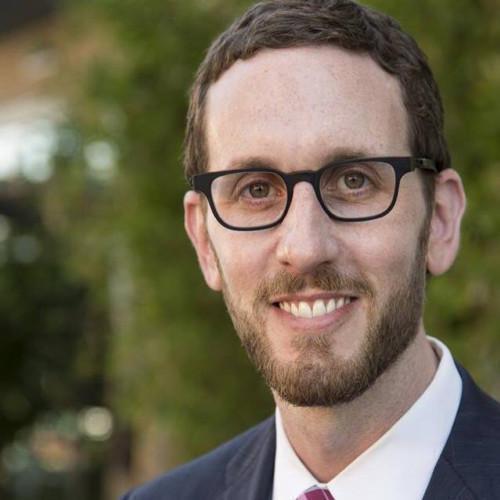
"Aquí solo hay una opción correcta, y es Scott Wiener. He expresado mi apoyo hacia él muchas, muchas, muchas, muchas veces, y me entusiasma verlo asumir un cargo más alto. Pueden leer más sobre por qué lo apoyo en esos enlaces. ¡Connie Chan está dando una dura pelea! ¿Por qué? Principalmente porque Nancy Pelosi respaldó a Chan. Pelosi afirma que es porque Chan es una luchadora que representa a los mismos electores que le importan, pero eso es doble discurso político. En realidad, era bien sabido que Scott Wiener quería postularse para el escaño de Pelosi cuando ella se retirara, ya que ha alcanzado el límite de mandatos en todos los cargos legislativos estatales y locales. Estaba dispuesto a esperar hasta que ella decidiera retirarse (tiene 86 años), pero se sumó el año pasado cuando Saikat Chakrabarti representó una amenaza real de desplazar a Pelosi y asegurar el escaño. Pelosi está molesta por esto, ya que quería reservar el escaño para su hija, Christine Pelosi, y respaldó a Chan para vengarse de Wiener. Ella sabe que desplazar a una representante Chan por su hija en el futuro es más fácil que desplazar a un representante Wiener, así que le presta su voz y su marca a Chan. No caigan en esta muestra descarada de nepotismo auténtico, ya que Chan y Pelosi nunca fueron cercanas antes del respaldo. Pelosi tiene 86 años; debemos agradecerle sus contribuciones, pero, al igual que con la senadora Feinstein, debemos animar a nuestros políticos mayores a retirarse antes de morir en el cargo. En cambio, debemos elegir al mejor candidato para el puesto, que es Scott Wiener."

U.S. House · California District 15

Los Angeles City Mayor
Karen Bass, the incumbent, has been a massive disappointment. She’s been very anti-transit (especially crucial during LA’s massive investment into transit), slow to respond to the Palisades Fire, highly corrupt, promoted a failed homeless-reduction experiment, and refused to follow the law. I don’t agree with all of Raman’s positions, but she’s young, pro-transit, pro-urban planning, and is the best choice.
Berkeley City Council · District 1
All four of these support housing abundance, safe streets, and sensible compromises for progress across the political spectrum. I recommend you vote for them.
Berkeley City Council · District 8
All four of these support housing abundance, safe streets, and sensible compromises for progress across the political spectrum. I recommend you vote for them.
Oakland City Council · District 2
San Francisco County Board of Supervisors · District 6
Oakland City Council · District 6
San Francisco County Board of Supervisors · District 10
San Francisco County Board of Supervisors · District 2

San Francisco County Board of Supervisors · District 4

San Francisco County Board of Supervisors · District 8
San Francisco Assessor-Recorder

San Francisco Board of Education
The SF Board of Education is seen as a stepping-stone political office to the Board of Supervisors. If you like the recent progress the city has made in the past 2 years, you enjoy moderate governance. Vote for Kim, Brown Garibay, and Tung. Kim is the current Board president and helped put Algebra back in 8th grade, and Brown Garibay and Tung are moderate voices that prioritize fiscal governance, child achievement, and competent governance.
San Francisco Board of Education
The SF Board of Education is seen as a stepping-stone political office to the Board of Supervisors. If you like the recent progress the city has made in the past 2 years, you enjoy moderate governance. Vote for Kim, Brown Garibay, and Tung. Kim is the current Board president and helped put Algebra back in 8th grade, and Brown Garibay and Tung are moderate voices that prioritize fiscal governance, child achievement, and competent governance.
San Francisco Board of Education
The SF Board of Education is seen as a stepping-stone political office to the Board of Supervisors. If you like the recent progress the city has made in the past 2 years, you enjoy moderate governance. Vote for Kim, Brown Garibay, and Tung. Kim is the current Board president and helped put Algebra back in 8th grade, and Brown Garibay and Tung are moderate voices that prioritize fiscal governance, child achievement, and competent governance.

San Francisco Community College District Board
Similarly to the SF Board of Education, the SF Community College board is facing down a structural deficit. Ball, Lace, and Tam have the fiscal responsibility needed to place our city college back on solid financial footing, otherwise it risks going bankrupt.

San Francisco Community College District Board
Similarly to the SF Board of Education, the SF Community College board is facing down a structural deficit. Ball, Lace, and Tam have the fiscal responsibility needed to place our city college back on solid financial footing, otherwise it risks going bankrupt.
San Francisco Community College District Board
Similarly to the SF Board of Education, the SF Community College board is facing down a structural deficit. Ball, Lace, and Tam have the fiscal responsibility needed to place our city college back on solid financial footing, otherwise it risks going bankrupt.

Oakland City Mayor
Lee, famous for her time as a US Representative, has found the transition into an operating role a bit more challenging, but has successfully convened enough political support to place Oakland Measure EE on the ballot. I support her over the other candidates, and hopefully with Measure EE passing, she has the political strength to improve Oakland’s financial position, reduce crime, and grow the economy.
Berkeley City Council · District 4
All four of these support housing abundance, safe streets, and sensible compromises for progress across the political spectrum. I recommend you vote for them.
Berkeley City Council · District 7
All four of these support housing abundance, safe streets, and sensible compromises for progress across the political spectrum. I recommend you vote for them.
Alameda-Contra Costa Transit District Board · Ward 3

Alameda-Contra Costa Transit District Board · Ward 4

Bay Area Rapid Transit District Board · District 8
San Francisco Community College District Board (Partial Term)
San Francisco Public Defender
Recomendación: votar sí
This is a set of good governance reforms mirroring the reforms we want to pass in SF. It transitions Oakland to a proper strong mayor system, rather than a diffuse one where accountability is spread between multiple departments.
Recomendación: votar sí
Similar to SF’s Proposition J, this also closes the foreclosure loophole for transfer taxes. This less so a compromise on reducing transfer taxes than a new way for Oakland to generate revenue, but Oakland does need all of the revenue it can get--voters previously rejected a property tax that could raise money.
Recomendación: votar no
This is Berkeley’s public bank measure. Unlike SF’s Proposition B, it actually levies a tax to fund a public bank. My arguments against a public bank above apply here as well, and I do not think Berkeley residents should fund their own duplicative, inefficient, risk-taking bank.
Recomendación: votar sí
In California, voters must approve all bonds. This housing bond is similar to ones approved in 2002, 2006, and 2018, which have been effective: building a house for every $100k in the bond. Construction prices are now higher, but what convinces me is GrowSF’s reasoning: “Voters must choose between funding a program that’s expensive but works, or waiting for regulators to fix their self-imposed high construction costs. We think voters should authorize the bond and push for better cost controls.
Recomendación: votar sí
California’s budget is highly dependent on income and capital gains taxes (because of Prop 13, which limits property taxes); in fact, 50% of California’s income taxes comes from the richest 1-2% of individuals! As a result, we are more subject to boom-and-bust cycles: during the recession, California budgets were severely slashed, while the state was flush with cash during tech IPOs. This makes a solid rainy-day fund even more necessary. The fund was created in 2014, but has been limited by a cap and arcane definitions that prevented the state from using it to its full potential. Proposition 2 increases the amount of money California is allowed to place in its rainy day fund and forces it to be filled during boom years. And with a booming stock market and AI companies poised to IPO, this change could not come at a better time. This change makes California less susceptible to boom-and-bust cycles and has bipartisan support.
Recomendación: votar sí
In other states, schools are funded by property tax revenues: as properties become more valuable (due to more families moving in), schools get more funding; a virtuous cycle! Not in California. Due to Prop 13, extremely valuable properties often pay very little in property tax, meaning that California schools are and have always been chronically underfunded. In 2012, voters enacted a temporary tax on high earners to fund schools and medicaid during the depths of the Great Recession: instead of 9.3%, high earners pay a marginal rate of 10.3 - 12.3%. This tax was extended in 2016, and we are now asked to make it permanent. This tax increase started off as a band-aid solution to a recession funding challenge, but at this point has become a key cornerstone of schools’ budgets. Before this tax in 2012, California was 50th in per-student educational spending; now we are at 16th. I agree that we should be clamoring for larger good governance reform, but 2020’s Prop 15 failed and we have Prop 40, the billionaire tax, on the ballot this year. It does not seem like Californians are interested in good governance tax reform; until then, we are left with the tools that we do have. And this tax has not directly caused significant high-income flight away from the state: analysis showed that only 535 individuals left due to it. Schools and health care should be funded well, and if an income tax on high earners is the only way to do it, it’s the least worst out of all of our options.
Recomendación: votar no
This sounds like a good idea as it simply allows cities to establish taxpayer funding for candidates, which was banned in 1988’s Prop 73. There are two reasons you should vote no: 1988’s ban did not apply to charter cities, so SF, Berkeley, Oakland, and a few others do already have public financing for election candidates. And the results don’t show much of a difference between them and cities who ban the practice: donors donated less, incumbents won at the same rate, and fewer candidates ran for office. If nothing really changes, does spending taxpayer money on it really matter? If passed, Prop 4 would give cities broad discretion to design their own public financing programs. Ideally, we would have audits to ensure that the money is used effectively (especially if, like in SF, a single candidate can receive $255k - $1.2M in funds!). But Prop 4 does not require any audits and explicitly exempts the state’s campaign finance watchdog from administering or enforcing any financing system. Giving cities optionality can be good, but we already know this one doesn’t work.
Recomendación: votar sí
California’s current recall process is done in a single ballot with two questions: should the individual be recalled and if so, who should replace them? If more than 50% of voters say yes to the recall, then the winner of the second question immediately steps into that role. However, anyone can run as a replacement! If Governor Newsom were recalled in 2021, our governor would currently be Larry Elder, a talk show host who led the replacement election with 27% out of all voters. This is plainly undemocratic and makes recalls a tool used by partisan interests. Proposition 5 would separate recalls from replacement; in the meantime, the Lieutenant Governor or an appointed caretaker would step into the role, similar to most roles in the rest of the country.
Recomendación: votar sí
This proposition allows the state to issue bonds used for mortgage down payment assistance. I am no fan of demand subsidization, especially in California, where demand is high and supply is low! However, this is a well-designed proposition: the down payment assistance only applies to new-construction homes. This means that the demand subsidy only applies to new-construction homes, which provides a much-needed jump in supply. Additionally, it contains good bureaucratic reforms that makes it cheaper for developers to construct condominiums, and would not cost taxpayers any money (the bonds are second mortgages paid back by the homeowners). We are in a housing crisis so all options should be on the table; this is a well-designed one.
Recomendación: votar no
Recomendación: votar no
This proposition would require ID checks when voting in-person and additional checks when voting by mail. It is in-line with the national Republican push for voter ID laws, which generally solves a problem that doesn’t exist: California already verifies signed ballots against drivers licenses and verifies ID numbers against state and federal databases, and the state does prosecute. The right wing Heritage Foundation only found 71 instances of voter fraud between 1982 and 2025 that were all prosecuted--a period where there were more than 1.5 billion votes. Additionally, every time this question has been studied, nobody has ever found voter fraud to be an issue. The bigger answer is that democratic voting often leads to results smaller constitutents don’t like, and instead of admitting that they or their policies are just not popular, voter fraud becomes an easier scapegoat. More importantly though, Proposition 39 allows any citizen to sue local officials if they don’t think those officials are properly adhering to the rules. This is a tactic that CEQA and other states have used to great effect to stop government and other private individuals from working well: after CEQA passed, the state had to respond to every individual’s concern of environmental harm (including the presence of new shadows), and this is the legal mechanism by which Texas has banned all abortions (private citizens can sue doctors).
Recomendación: votar no
Ah, the oft-mentioned Billionaire Tax, a one-time 5% tax on wealth (the value of everything an individual owns, at some valuation). Here’s a non-exhaustive list as to why you should vote against it: This is a one-time tax that funds California’s medicaid, a program that runs forever. What happens when this tax money runs out? The proponents projected $100B in revenue from the tax. In reality, the Legislative Analyst’s Office only expects “tens of billions of dollars” in one-time revenues, because many billionaires have already left California, taking $27B in potential revenue with them. This tax will reduce California income tax revenues by $1B a year, as more wealthy people leave. NBER estimates that this tax will reduce California’s total revenues by collecting $30B but decreasing income taxes by $39B. This tax is called the Billionaire Tax, but its proponents have already discussed moving the threshold down to $50M in wealth. Similarly to how the United States income tax applied to only the top 10% of households at the beginning but now applies to everyone, this is to be expected. No other state considers a wealth tax because it’s easy to move to an adjacent state. People are mobile, and California being a desirable state to live in can only matter so much! Sweden abolished its wealth tax in 2007 because it depressed entrepreneurship and decreased revenue. Investments that could have stayed went to foreign countries, capital was invested elsewhere, and founders left to other countries. Entrepreneurship recovered after the tax was repealed. A wealth tax is an especially bad type of tax because it taxes productive assets and hits California hard. With a wealth tax, there is a disproportionate impact on entrepreneurship because it values productive assets rather than already-earned income, consumption, or immobile property.
Recomendación: votar no
First off, this proposition was placed on the ballot explicitly to counter Proposition 40; if both pass, whichever proposition gets more votes wins, the other becomes null and void. If your sole goal is to block Proposition 40, you should vote yes on this proposition. I will try to analyze this proposition independently below. In 1979, voters passed the Gann Limit, which restricted how much money the state can spend. If California’s revenues increase beyond the Gann Limit, California must return half of it to taxpayers and spend the other half on education in an inflexible manner; even creating a rainy day fund in Prop 2 was affected by the Gann Limit. However, ballot propositions can simply declare that they themselves are exempt from the Gann Limit. As a result, if voters approve a proposition, suddenly its restrictions do not apply. Proposition 41 would ensure that all new special taxes also fall under the Gann Limit, under the reasoning that all taxes should be treated equally, and that if all taxes fell under the limit, there would be more appetite for structural reform. This is particularly bad because many existing taxes may now fall under the Gann Limit, even if Californians had no hand in creating them! Unfortunately, we do know that structural reform is hard and likely impossible (2020’s Prop 15 failed). Barring that, we should not restrict how much the state can spend any further as that just prevents our ability from making necessary improvements. Prop 41 severely restricts government efficiency and mandates excessive audits. Vote No.
Recomendación: votar sí
Proposition 42 bans two types of taxes: taxes on retirement holdings and retroactive taxes. There is some reasonable basis in the logic: taxes on ownership that cannot be valued requires payment plans, deferral mechanisms, and appraisal fights just to exist, and retirement savings are seen as stable sources of wealth for all Americans--seeing them disappear due to a tax feels like the government is just taking your money. To me, it does feel like retroactive taxes and taxing retirement accounts is something that breaks the contract between individuals and the government. For the former, the rules you follow should be set moving forwards, and retroactive taxes, while already arguably unconstitutional, should be explicitly prohibited. And retirement accounts are a fabulous way for individuals to participate in wealth creation for retirement, when the societal contract is that you should not need to work. Even though this tax was explicitly created to counter Proposition 40, I think the policies it implements are sound and worthwhile to implement.
Recomendación: votar no
In 1978, California passed the infamous Proposition 13 that capped property taxes. It also set a 2/3rd approval threshold for all new taxes any government body wanted to implement. In 2017, the California Supreme Court stated that citizen initiatives--propositions placed onto the ballot via citizen signatures rather than a legislative act--only needed a majority approval to go into effect. The Howard Jarvis Taxpayers Association, unhappy at this loophole to their Prop 13, was planning on placing an even more restrictive measure onto the ballot. They reached a compromise with the California legislature to place Proposition 43 onto the ballot, to get rid of the loophole that allowed for an exception to the 2/3rd approval threshold. The 2/3rd approval threshold actually decreases the efficiency of government spending. It’s such a high bar that organizers need to satisfy every single unaligned interest group and get everyone in support, in order for there even to be a chance of the measure passing. We can see the effects by comparing against bonds: bonds have become massive top-line numbers with something allocated for every different interest group (firefighters, teachers, homeless organizations, etc.) in order to get everyone’s political support--even then, the measure barely passes. This incentivizes waste because not everyone’s project needs to be funded every time, and smaller, more frequent approvals would save money and allow for more flexibility. Until we get a larger set of tax reform, we should not close off one avenue we have towards improving governmental efficiency. You can make an argument that the rules should be consistent and that if you don’t like the rules, we should change the rules, but changing the rules is near impossible. I would rather take a pragmatic approach and take what we can get, rather than trying to be ideologically pure. Vote No.
Recomendación: votar no
Remember when I mentioned above that SEIU-UHW, California’s healthcare worker union, loves playing hardball? (They use ballot propositions as blackmail, as they are the ones behind California’s 2018, 2020, and 2022 dialysis propositions, because the dialysis clinics wouldn’t give in to the union’s demands.) They’re back!!! This proposition is sponsored by SEIU and punishes nonprofit clinics that don’t spend at least 90% of their revenues on their “mission”; currently they average around 80%. Why is this on the ballot? It’s because SEIU is organizing nonprofit community clinic workers and they want leverage in those negotiations. A labor dispute belongs at the bargaining table, not at the ballot.
Recomendación: votar sí
The California Environmental Quality Act prescribes that strict environmental reviews need to be done before any government body undertakes a project, and allows private citizens to object when they disagree. It has done a lot of good for California’s environment not by banning anything, but by slowing development down so that developers either gave up or moved to other states. It is also the main reason why the state can’t build anything anymore, because any individual can file a lawsuit and slow a project down by years. In addition, projects now spend years “in environmental review”, where lawyers and consultants try to address every possible harm (e.g. presence of shadows, noise pollution, change in views, etc.) a project could cause in a massive, thousand-page document, to ward off any challenges. It’s the main cause of the slowdown of high-speed rail, electrified rail, housing production, new water pipelines to address drought, cheaper electricity, better roads, improved seawalls and piers, and any infrastructure project requiring government input. Right now, CEQA has no “clock”--so anyone can challenge a project, and the resulting court battles drag on for years. Proposition 45 is a good governance compromise: it adds deadlines for review and judgment on essential infrastructure such as housing, water, clean energy, and transit. The review process still exists, but developers can now have certainty that it will take no longer than a set number of years, rather than an unbounded amount of time. There are nuances and CA YIMBY has done a great job going over them: this bill will streamline the building of new freeways and housing in wildfire zones, in addition to clean energy and transit; it also somehow excludes high-speed rail, one of the projects that needs CEQA exemption the most. It is reasonable to vote No and hold out for more transformational reform.
Recomendación: votar sí
In 2024, Proposition E created a commission to analyze which of SF’s commissions are duplicative, inactive, or unnecessary. Proposition A this year is a result of those results. For decades, SF’s default fix to a problem was to establish a commission to study the problem and propose solutions. Many of them duplicate existing city functions and, due to legal rules on how they are established, cannot be eliminated except by public vote. This is step one towards reducing SF’s government bureaucracy, so the city can move faster and deliver better services to the public.
Recomendación: votar no
This proposition sounds great: why not have the option to create a Public Bank instead of being beholden to Wall Street? Well, because the FDIC won’t allow it! Let’s ignore the other issues a SF city public bank might have (duplicative of existing programs, inefficiency, lack of prioritization, an exemption from the Sunshine Ordinance, etc.) and think through the incentives a bit more: what would a public bank do that existing banks can’t? Proponents say that it could provide financing for affordable housing, small businesses, climate infra, or other locally-focused projects. Great! But why would a local business choose to borrow money from the public bank, instead of some other local community bank (which already exists)? The public bank would have to offer lower interest rates. Interest rates are set by the risk a bank is taking, so a lower rate means the bank takes on more risk. So the public bank would end up taking on the highest-risk loans, because there’s a reason other banks won’t price that risk that cheaply. And what happens when a bank takes on too much risk and the economy turns? Even with the best management, banks can fail through no fault of their own, requiring a taxpayer bailout. SF should not commit scarce capital and attention to a bank and open the city up to a new set of risks when things go wrong. Vote no.
Recomendación: votar sí
How is subsidized housing (often mistakenly called “affordable housing”) created today? Most commonly by taxing newly-built homes: every new housing development needs to reserve 15% of its units as subsidized, meaning that the developers lose money on 15% of their units. This often means that new development does not financially make sense in SF, which is why you basically haven’t seen any new housing construction in San Francisco in the past decade. To their credit, the Board of Supervisors realized this and lowered the rate to 5%, after long negotiations with local nonprofits who want even more (25%) subsidized units in every project (in reality, this really means that no project actually gets built). As part of this compromise, Proposition C was placed on the ballot: it extends and funds SF’s Housing Trust Fund, and focuses that as the main vehicle through which subsidized housing is built. It’s a sensible, well-designed compromise that funds subsidized housing through future property tax revenues rather than a tax that depresses construction. Though, there’s a good argument to be made that we shouldn’t build subsidized housing at all: if we instead build enough housing and maximize supply, that will drive rents down enough that subsidized housing can be more expensive than market-rate housing. This is currently happening in Austin, Denver, and Portland. But that’s not the reality in San Francisco, where our booming AI industry and large number of regulations prevent the building boom/economic contraction that those three cities are seeing.
Recomendación: votar sí
Recomendación: votar sí
In order to run a city, SF needs to sign contracts with people to do things. But the time it takes to sign a contract currently takes anywhere from 9-18 months. This is how it cost the city $1.7M to build a new public toilet in Noe Valley; and nobody was blamed for it because the rules were so complex that no one person was responsible! Proposition E drives better accountability and speed: one person in charge of one contracting rulebook. This is better than rules and processes: if they perform poorly, they can be fired and replaced in less time than it takes for a project to navigate the current process. At this point, we have much to gain and little to lose.
Recomendación: votar sí
If you go on Wikipedia, you’ll see that San Francisco has a “strong mayor” style of governance. This is technically true, since a “strong mayor” system means that the mayor is directly elected, but unlike literally every other strong mayor city, 90% of what the mayor does is restricted by other rules and processes. Mayor Lurie could only lead 6% of the commissions he is nominally in charge of, meaning that his hands are constrained by policies. People often ask me if I think Mayor Lurie is doing a good job. The real answer is that I actually don’t think it currently matters who the Mayor is--the real change came from the 2024 Board of Supervisors flipping to moderate control. This is the real reason change is so slow in San Francisco: even when someone new is elected, the existing commissions and department heads stay in power. This can be good, but at this point, it’s constraining San Francisco’s ability to improve the city by removing accountability. I believe in Mayor Lurie and he needs the right tools to do his job, so that we can hold he himself accountable. Proposition F is a sensibly designed measure to improve local governance while still retaining important oversight mechanisms.
Recomendación: votar no
You voted for this in 2022 and 2024 already. Just vote no again and keep Sunset Dunes as the city’s second-most visited park.
Recomendación: votar sí
Similarly with other Bay Area agencies, Muni’s ridership is still below pre-covid levels and relied on fares for a higher-than-average percentage of its revenue. When fares decrease, it becomes significantly more expensive to run the same service. As a result, it’s currently running a structural deficit due to that lower ridership. Muni has done its best to cut costs already, but at some point, it needs to start cutting service. Muni has real challenges and liabilities, but refusing to fund it does not solve any of those problems; it simply makes life worse for everyone in the city. This tax ensures that we continue to fund Muni, which is the only method we have to reduce congestion in San Francisco. Even Waymos would not solve the problem--a Waymo takes the same amount of space on the road as a car, and road space is what’s in short supply. Every individual who takes Muni instead of a car lessens traffic for everyone else on the road. So for only an extra $127 per year (more for commercial buildings), Muni gets stable funding, and you get less congested streets and a better public transit system.
Recomendación: votar no
Recomendación: votar sí
As mentioned above, San Francisco charges a transfer tax. But there’s a loophole: if a building is foreclosed (like the now-closed San Francisco Centre mall), the buyer in foreclosure does not have to pay the transfer tax. Proposition J would remove that loophole and charge transfer taxes on foreclosed properties. Generally, transfer taxes are bad, so why are we voting for it? Proposition J is part of a compromise: the Board of Supervisors recognized that transfer taxes are bad, but it currently provides a not-insignificant source of revenue. They would like to cut transfer taxes on housing (which is needed) and want to backfill that revenue with a new transfer tax on foreclosed properties. Nationwide, transfer taxes apply consistently for all kinds of property sales, so this is a real loophole that is being closed. By backfilling that revenue, the Board of Supervisors is able to move forwards with this plan and spur housing construction.
Recomendación: votar sí
COVID decimated weekday transit ridership in the Bay Area: BART and Muni are consistently at 60% of their pre-pandemic weekday ridership averages. However, public transit has high fixed costs to run. Bay Area transit agencies historically drove a higher-than-average percentage of their revenues from fares, and with fares now 40% lower, there is a structural deficit. COVID and state relief funds run out this year, and there needs to be a permanent funding source. Transit handles a significant chunk of travel needs in the Bay Area: there’s only a certain amount of road space, and cars can only fit so close together. Transit is the only option to fit more people into a fixed amount of space. Without it, congestion would jump as each person gets into their own cars, slowing down traffic for everyone. Our transit today can easily become the ruins of tomorrow if we don’t support it. Voting against this is a bad choice.
Hansen Qian's endorsements for the November 3, 2026 election, from their published voter guide: https://hansenq.substack.com/p/2026-november-endorsements-guide, se abre en una pestaña nueva (published 2026-10-18).
Californians have historically supported issuing bonds for medical research. However, this proposition is a blatant attempt at using that goodwill for a private cash infusion at the expense of the state’s financial position, as it would require the state to repay the cost of these bonds to a tune of $500-800M a year. If passed, half of the $8.4B must go to the California Institute for Immunology & Immunotherapy, an under-construction institute founded by the main funder of Proposition 38. The cofounder of the institute is financier Michael Milken, who was indicted of securities fraud and racketeering in 1990 and known as the “junk bond king”. Even as a good general practice, it is unclear if funding research in this manner has been a good use of funds. Californians approved $3B worth of research bonds in 2004 and $5.5B in 2020, but only one drug came to market with $5M in spending from these bonds. Most research ideas fail and medical research is worth funding, but not with explicit conditions on how the money is used to enrich a specific institute that isn’t yet built.
In 2022 and 2024, you voted for 15 local ballot propositions, each. Today, you’re voting for 11. In comparison, other Bay Area cities only vote for 1-3. SPUR calculated that 30% of the ballot propositions we vote for shouldn’t actually be on the ballot. Why do we in SF vote for so many? It’s because the threshold for putting a proposition on the ballot is so much lower here: signatures of 2% registered voters (instead of the median 10% across California) or only 36% of the Board of Supervisors. This leads to bickering political factions submitting dueling propositions for the public to decide: 2024’s Prop D & E, Prop L & M; 2022’s Prop D & E, Prop I & J. Political negotiations should be done by our better-informed legislators, not the public. Proposition D raises these thresholds to be closer to (but still less than) the average Californian city, hopefully reducing the amount of decision anxiety we voters get every election.
San Francisco currently charges some of the nation’s highest transfer taxes every time a property is sold. Right now, this money can be used for anything; this proposition requires that half of that tax is used specifically on homelessness and “social housing”. There are three reasons why you should vote no: This locks in some of the nation’s highest transfer taxes into law. Transfer taxes have been shown to reduce housing production. At a time of housing crisis, we should not lock in a tax that depresses housing production, especially a type of tax that often doesn’t make any money. It removes ~$120M in annual transfer tax revenue from the city’s general fund. This removes flexibility for our legislators to spend the money in the most effective way possible. This measure changes the definition of “social housing” to be something that currently does not exist in city code, nor in any other city’s code. It requires “collective management” in a way that has never been legally defined. In a sense, this would be an experiment on a new type of housing that doesn’t currently exist.